Things To Do In Parma, Italy (2026 Guide)
Parma's reputation runs on cheese and ham, but the city that produced both also built a cathedral people travel across Italy to see and a park loop locals use every evening. Here is the real list, backed by Google's own ratings.
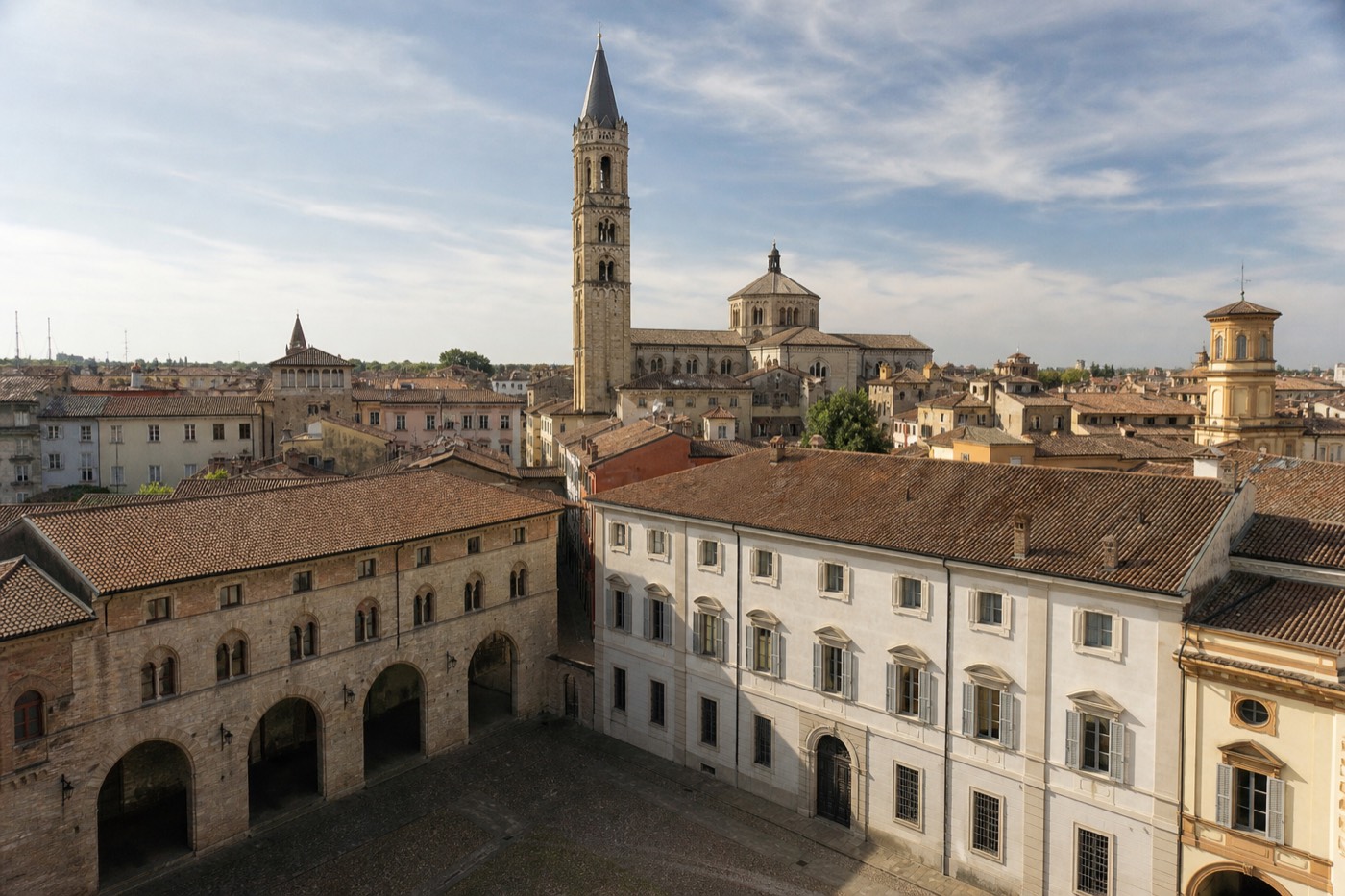
Parma's reputation runs almost entirely on Parmigiano Reggiano and Prosciutto di Parma, and for good reason, but the city that produced both also built a Romanesque cathedral with a dome fresco worth the neck strain, a Renaissance palace complex with an opera house tucked inside it, and two parks that locals actually use after work rather than just photograph. None of it requires a car. The historic center sits inside a compact loop you can cross on foot in under twenty minutes, which is exactly why a morning of sightseeing and an afternoon tasting tour fit together so easily. Below is the full list of sights worth your time, backed by their actual Google ratings rather than a generic must-see list, plus where the market and the factory circuit fit in.
At A Glance: Discover the food heritage behind a Parma stop. Explore Parma Artisan Food Walk
Is Parma Worth Visiting In Italy?
Yes. Parma packs a 4.7-rated cathedral, a Renaissance palace complex, a working opera house and a centuries-old market into a walkable center, on top of being the source of Parmigiano Reggiano and Prosciutto di Parma. That is the short version. For the longer case, including how Parma stacks up against bigger Italian cities and who should actually skip it, read our full breakdown of whether Parma is worth visiting.
What To Do In Parma For A Day?
A single day is enough to cover Parma Cathedral, the Baptistery, the Pilotta complex and Piazza Garibaldi on foot, with time left over for a sit-down lunch or a guided tasting. This page is the listicle version: the sights worth your time and why they made the cut. For an hour-by-hour plan you can actually follow from breakfast to dinner, use our one-day Parma itinerary instead.
What Are The Best Sights In Parma's Historic Center?
Parma Cathedral, the Baptistery, Palazzo della Pilotta and the Farnese Theater are the four sights most worth prioritizing, all within a ten-minute walk of each other and all rated 4.5 or higher on Google. The table below lists every independently rated attraction in the city center, pulled from its own Google listing so you can weigh review counts, not just the star average.
| Attraction | Google rating | Review count |
|---|---|---|
| Farnese Theater | 4.9 | ~2,500 |
| Parma Cathedral (Duomo) | 4.7 | ~13,000 |
| Teatro Regio (opera house) | 4.7 | ~5,000 |
| Palazzo della Pilotta | 4.6 | ~8,100 |
| Basilica di Santa Maria della Steccata | 4.6 | ~1,600 |
| Casa della Musica | 4.6 | ~490 |
| San Giovanni Evangelista | 4.6 | ~613 |
| Parco della Cittadella | 4.5 | ~6,400 |
| Baptistery of Parma | 4.5 | ~1,100 |
| Governor's Palace | 4.5 | ~1,800 |
| Palazzo Ducale di Parma | 4.5 | ~831 |
| Palatina Library | 4.6 | ~110 |
| Parco Ducale | 4.4 | ~5,300 |
Notice that the Farnese Theater, tucked inside the Pilotta complex, outrates the cathedral itself. It is a wooden Baroque theater rebuilt after wartime damage, and it gets fewer visitors than the Duomo simply because people walk past its entrance without realizing what is behind it. The lesson from this table is not to skip the obvious landmarks, it is to not skip the smaller ones either. Casa della Musica and San Giovanni Evangelista both sit near the cathedral cluster and both clear 4.6, but with a fraction of the review volume, which usually means fewer tour groups blocking the doorway when you show up.
If you're trying to plan around a tight morning, here's roughly how much time each sight tends to actually take, based on what these places are and how much there is to see, not an official posted duration:
| Sight | Suggested time | Best for |
|---|---|---|
| Parma Cathedral + Baptistery exterior | 20-30 min | Everyone, it's free and central |
| Farnese Theater | 15-20 min | Architecture and theater fans short on time |
| Full Pilotta complex (museums included) | 60-90 min | Museum-goers with a slower morning |
| Parco Ducale or Parco della Cittadella | 30-45 min | A break between tastings, or families with kids |
| Ghiaia market | 20-30 min | Anyone who wants a read on daily Parma life |
What Makes Parma Cathedral And The Baptistery Worth The Stop?
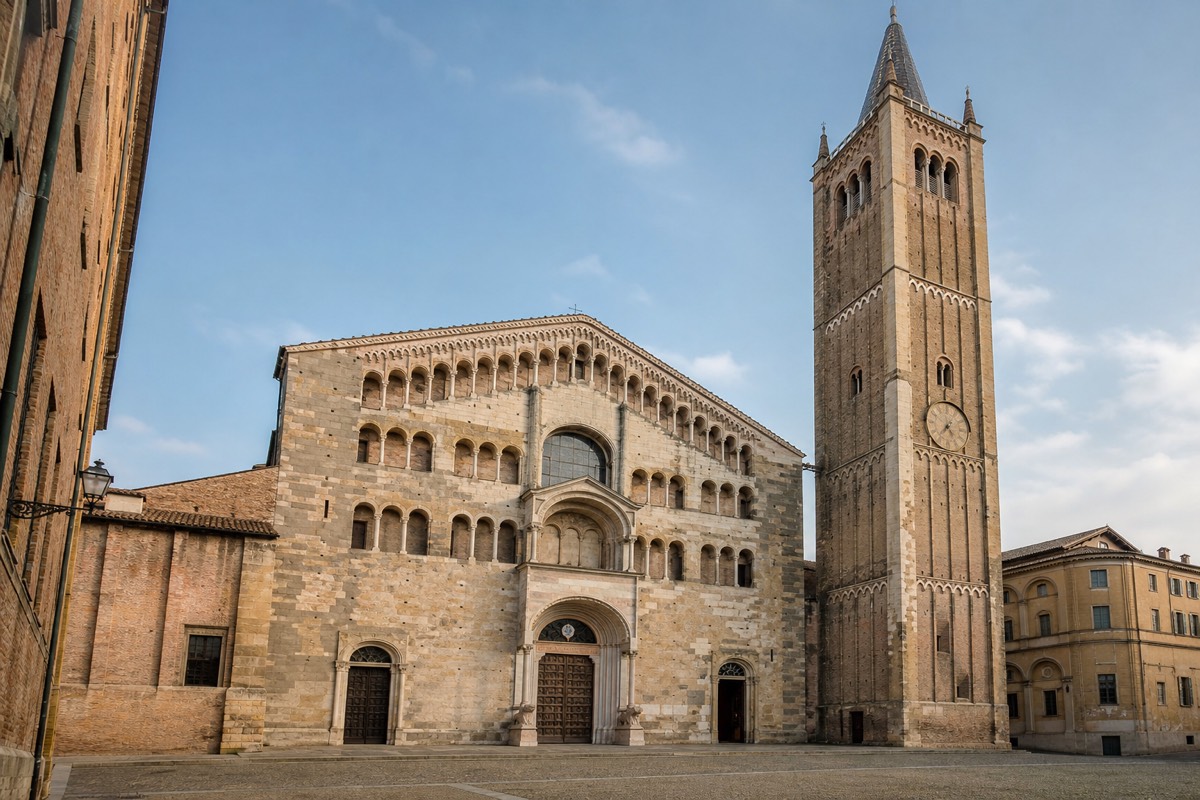
Parma Cathedral is a Romanesque church on Piazza Duomo, rated 4.7 from around 13,000 reviews, known for Correggio's dome fresco of the Assumption of the Virgin; next door stands the octagonal, pink-marble Baptistery, rated 4.5 from about 1,100 reviews. Both buildings face the same small square, so you see them together whether you plan to or not. The cathedral's exterior and the piazza around it cost nothing to admire, which makes this one of the few genuinely free stops on a Parma itinerary. Piazza Duomo also happens to be one of the three meeting points most food tours in Parma use, alongside Piazza Garibaldi and the front of the Teatro Regio, so if you are booked on a tasting tour later that day, you may end up back here anyway.
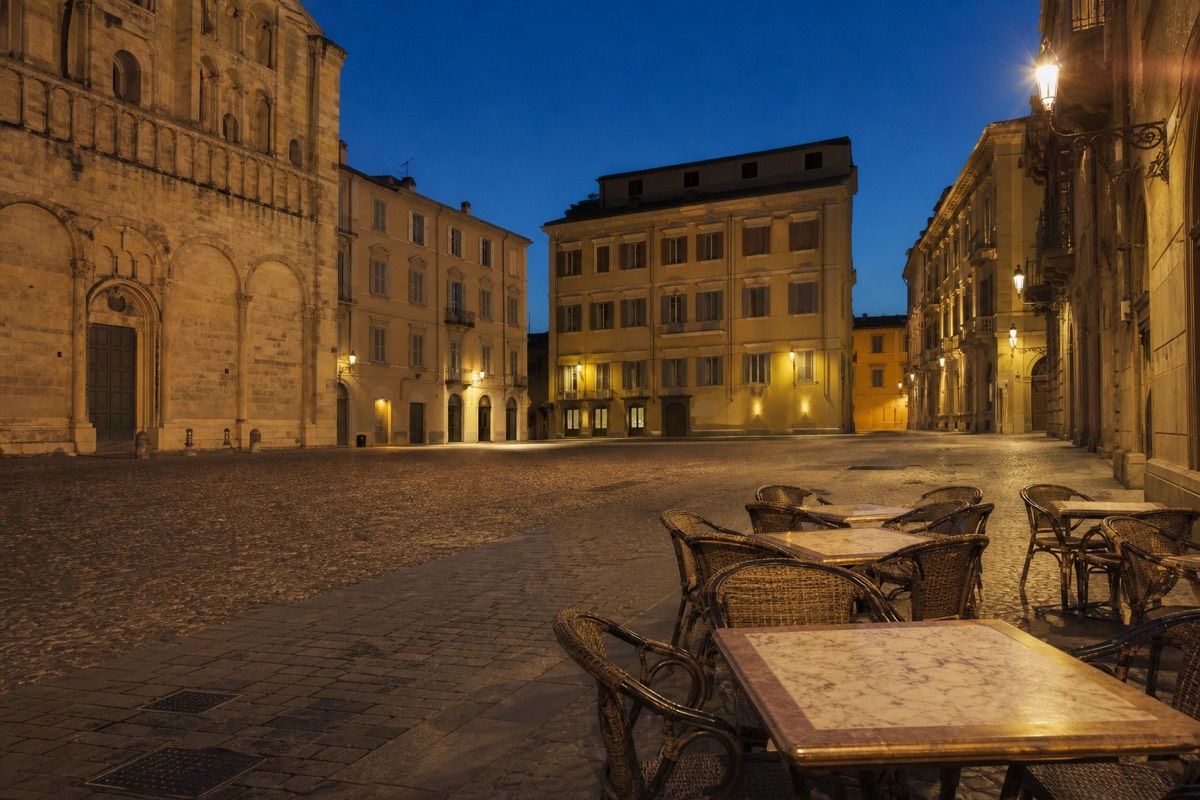
Inside, the Baptistery's carved reliefs (attributed to the medieval sculptor Benedetto Antelami) are the reason art historians rank it above most baptisteries in northern Italy. Give the pair thirty to forty-five minutes if you want to look properly rather than just photograph the facade. Neither building requires advance booking the way a factory visit does, which makes this the easiest stop on the whole list to fit around anything else on your schedule, tour, train, or lunch reservation.
What you won't get from a self-guided visit is the context: why Correggio's dome fresco was controversial when it was unveiled, why the baptistery took decades longer to finish than planned, or how the two buildings fit into the wider story of Parma as a Renaissance duchy rather than just a food town. That's the trade-off worth weighing throughout this whole list: independent sightseeing works fine for buildings you can walk into freely, and it works considerably less well the moment a working producer, rather than a museum, is behind the door.
What Can You See Inside The Palazzo Della Pilotta And The Farnese Theater?
The Pilotta is a sprawling Renaissance palace complex (4.6 rating, roughly 8,100 reviews) that now houses several museums under one roof, and its main draw, the Farnese Theater, is the highest-rated single sight in Parma at 4.9 from about 2,500 reviews. The complex was built for the ruling Farnese family starting in the late 1500s, and it now holds the National Gallery, the Palatina Library (4.6, though a much smaller crowd at around 110 reviews) and the archaeological museum, along with the theater itself.
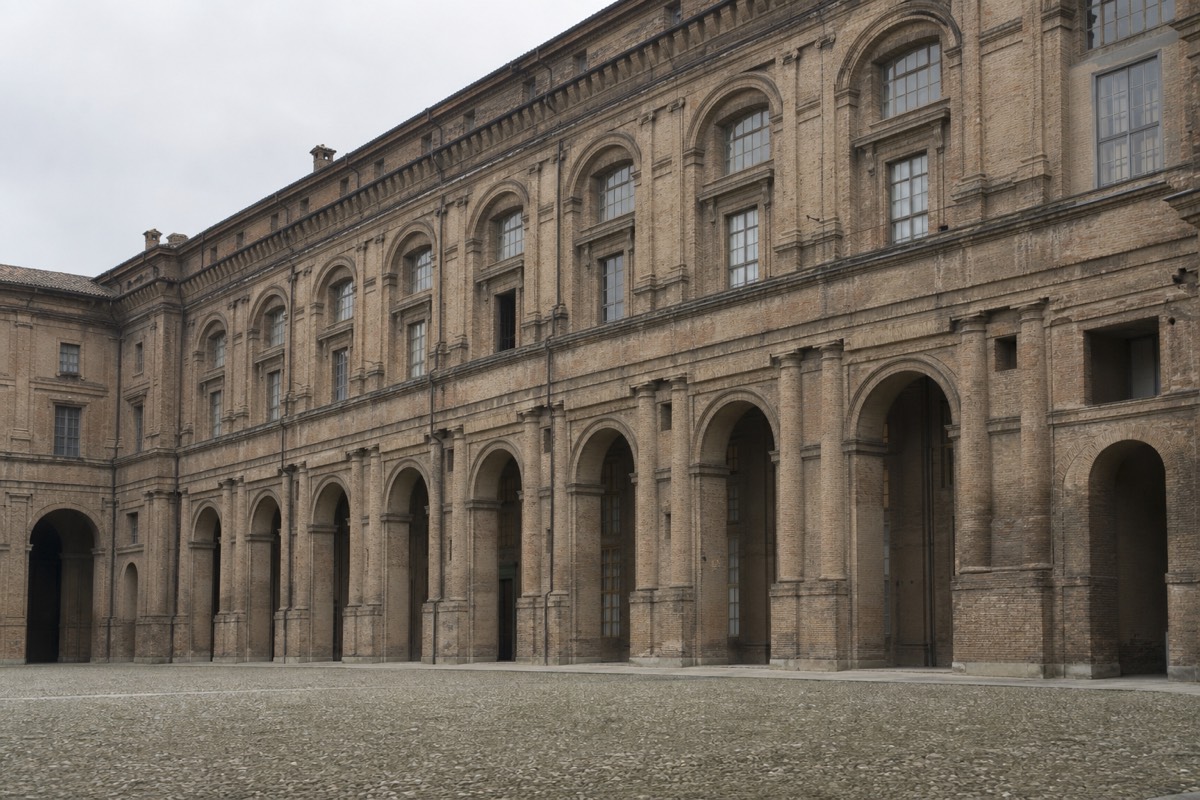
Who should skip the full museum circuit: if you only have an hour here, skip the National Gallery and archaeological rooms and go straight for the Farnese Theater. It is the single reason the complex outrates the cathedral, and it is small enough to see properly in twenty minutes, which matters if you have a tasting tour or a train to catch. Art history completists get more out of the full circuit, especially the National Gallery's Correggio and Parmigianino paintings, but casual visitors on a one-day trip consistently rate the theater as the part they remember.
The Pilotta complex was never actually finished, which is part of why its footprint feels oversized next to the rest of the historic center; the ruling Farnese family kept expanding it across generations before losing interest, and the unfinished brick sections are still visible from outside if you know to look for them.
The shortlisted food tours do not include Pilotta or Farnese admission.
Is The Teatro Regio Opera House Worth Visiting Even Without A Show?
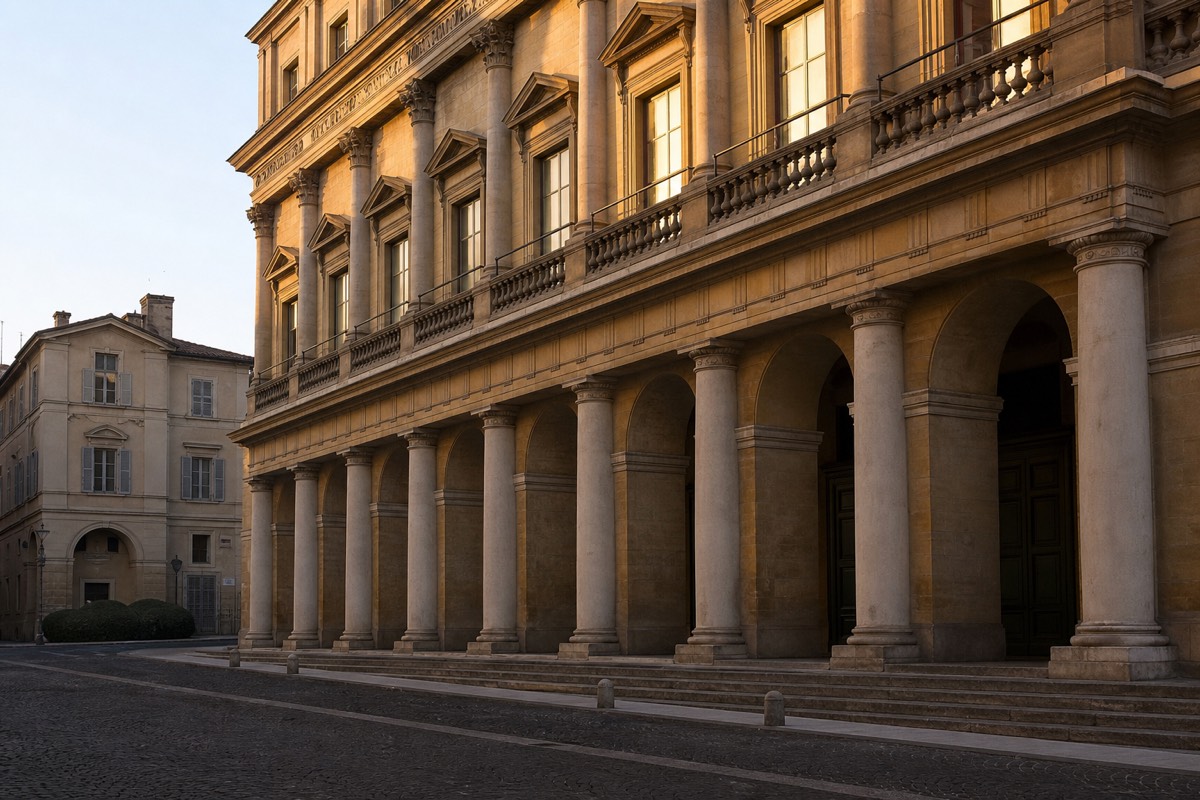
Yes for opera fans, optional for everyone else: the Teatro Regio rates 4.7 from around 5,000 reviews and hosts the Festival Verdi every October, a serious event on Italy's opera calendar, but the building itself is a stop for people already interested in the art form rather than a general must-see. Guided interior tours run on a schedule that varies by season, so check current times before building it into a tight day. The Teatro Regio's frontage also doubles as one of the standard meeting points for local food tours, so plenty of visitors end up standing in front of it without ever going inside.
Even without a ticket, it's worth the two-minute detour to walk past the facade rather than skipping the street entirely. The neoclassical front sits at an angle that photographs well in the late afternoon, and the small square in front of it is usually quieter than Piazza Garibaldi a block away, a decent spot to regroup or check a map without getting jostled by foot traffic, and close enough to Piazza Garibaldi that doubling back afterward costs you almost nothing in time.
If you are trying to decide how much cultural weight to give Parma against a bigger stop like Bologna on the same trip, our Parma versus Bologna comparison covers that trade-off directly, including which city rewards a longer stay.
The shortlisted food tours do not include opera performances or interior tours.
Where Can You Relax Outdoors In Parma?
Parco Ducale (4.4, about 5,300 reviews) is a formal ducal garden across the river from the center, and Parco della Cittadella (4.5, about 6,400 reviews) is a star-shaped former fortress converted into a public park with more open lawn. Both are free, both are used by locals rather than staged for tourists, and both are a reasonable place to sit down after a morning of walking and standing in front of frescoes. Parco Ducale suits a slower stroll with formal hedges and statues; Parco della Cittadella is better if you have kids who need to run somewhere that isn't a piazza full of outdoor cafe tables.
Enjoy the parks independently; no paid visit is required.
What Happens At Piazza Garibaldi And The Ghiaia Market?
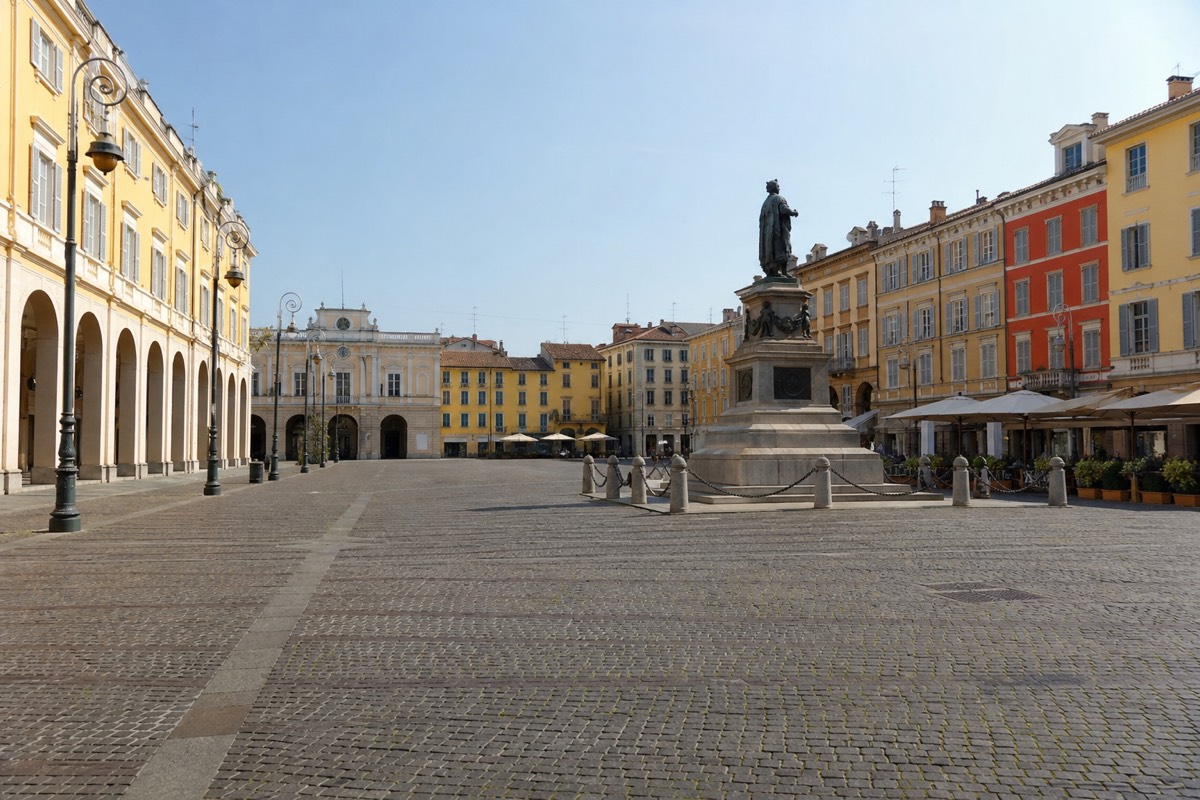
Piazza Garibaldi is Parma's main square and the single most common meeting point for local food tours, while the nearby Ghiaia market is a long-running produce and general goods market just off the square. Garibaldi sits at the center of the pedestrian grid, close enough to the cathedral, the Pilotta and most hotels that it functions as the city's default starting point, whether you're meeting a guide, grabbing a coffee, or just orienting yourself with a map. The Ghiaia market's exact opening days shift with the season, so check locally rather than planning around a specific date; what stays constant is the mix of fresh produce, cheese and household stalls that gives you a much better read on how Parma actually eats than any restaurant menu will.
Neither stop demands much planning. Piazza Garibaldi works whether you show up with fifteen minutes or an hour, since it's really an orientation point and a people-watching stop rather than a single attraction with a defined visit length. The market rewards going early, before the busiest stalls sell through their best produce and before the square fills with midday foot traffic, and it's worth going even if you have no intention of buying anything, since watching how locals actually shop for Parmigiano and cured meat tells you more about the products than a shop display case does.
What Food Is Parma Famous For?
Parmigiano Reggiano and Prosciutto di Parma are the two products that made the city's name, alongside Culatello di Zibello, traditional balsamic vinegar and fresh pasta like tortelli and anolini. That is the one-line answer. For the full breakdown of aging times, flavor differences and where each product is actually made, see our companion guide on what to eat in Parma, which covers the products in the depth this sightseeing list can't.
Can You Visit A Parmigiano Or Prosciutto Factory On Your Own?
Not really. Producers around Parma run on managed production schedules and require advance booking through a tour operator, so showing up at a dairy or a ham curing house without a reservation usually means you don't get past the front office. This is the biggest practical gap between "things to do in Parma" as a walking list and what actually gets you behind the scenes. A cathedral or a park rewards independent exploration just fine. A working cheese factory does not, because the people inside are running a business on a schedule, not staffing a visitor center.
A guided dairy visit such as Parma Cheese Factory Visit arranges access to production and aging areas on a scheduled visit. This is separate from Barilla’s pasta plant. Read the experience’s current meeting details and do not assume a working factory accepts unannounced visitors. Related reading: touring the Barilla pasta factory near Parma, Parmigiano Reggiano factory tour guide, Prosciutto di Parma ham tour guide, book a Parma food tour.
It's worth being clear about why this restriction exists rather than treating it as arbitrary red tape. A working dairy is handling raw milk on a strict daily schedule tied to when the herds are milked, and a curing house is managing aging rooms where temperature and humidity matter to the product. Neither can safely absorb walk-in visitors without disrupting production, which is exactly why operators build small, scheduled groups into their own day rather than opening the doors continuously. Booking ahead isn't a formality here, it's the only way in.
When Is The Best Time Of Year To Sightsee In Parma?
May, September and October bring the most comfortable walking weather, while November through March brings the Po Valley's well-documented fog and summer routinely pushes past 30°C with occasional heatwaves near 40°C. The table below shows average daytime highs across the year, useful for deciding how much time you'll actually want to spend outdoors between the cathedral and the parks.
| Month | Average high |
|---|---|
| January | 6.2°C |
| February | 8.8°C |
| March | 14.2°C |
| April | 19.1°C |
| May | 23.5°C |
| June | 28.1°C |
| July | 30.8°C |
| August | 30.1°C |
| September | 25.2°C |
| October | 18.6°C |
| November | 12.0°C |
| December | 6.6°C |
Two real local events are worth timing a trip around if opera or cured meat interest you: Festival Verdi runs every October at the Teatro Regio, and November Porc is a genuine culatello-focused food event cluster held every November. Neither publishes exact dates far in advance, so check the official listings closer to your travel window. For the fuller seasonal breakdown, including which month is best specifically for markets versus factory visits, see our best time to visit Parma guide.
Two seasons deserve an honest warning rather than a soft caveat. Summer heat in the Po Valley is not a minor discomfort: average highs sit near 30°C in July and August, and a 2026 heatwave pushed conditions toward 40°C across the Parmesan-producing region, uncomfortable for walking between sights and genuinely rough if you're also touring an outdoor market at midday. Winter brings the opposite problem: cold, humid, and foggy conditions from roughly November through March, well-documented for this part of the Po Valley specifically, which mutes the appeal of the parks and outdoor squares even though the indoor sights, the cathedral, the Pilotta, the Baptistery, are unaffected. If your trip has any flexibility at all, September and October give you the best odds of comfortable outdoor time without competing with peak summer crowds.
How Many Days Do You Need For Parma's Sights?
One full day covers the headline sights on foot; add a half day if you want a countryside factory tour, since dairies and ham producers sit outside the walkable center. A typical first day might run like this: cathedral and Baptistery in the morning while the light is good and the square is quieter, the Pilotta complex and Farnese Theater before lunch, then a market stop at Ghiaia or a booked walking food tour in the afternoon, finishing with a slow lap of Parco Ducale before dinner. If you're arriving by train, most of that route starts a five-minute walk from the station, and our guide to getting to Parma from Milan, Florence, Bologna and Venice covers the logistics of the trip in.
For the countryside, Private Parma Producer Day combines dairy, ham and balsamic visits over eight hours. Parma Artisan Food Walk stays in the city for 3.5 hours and does not visit a countryside factory. Choose one main food experience before arranging the remaining sights:
- Start at Piazza Duomo around 9am, while the light is good and the square hasn't filled with tour groups yet. Give the cathedral and Baptistery thirty minutes.
- Walk to the Pilotta complex, roughly five minutes away, and prioritize the Farnese Theater over the full museum circuit if you're short on time.
- Head to Piazza Garibaldi and, if the Ghiaia market is running that day, spend twenty minutes seeing what's actually for sale before the midday crowd builds.
- Join a booked tasting tour or have a sit-down lunch, since most walking food tours start from one of these three squares in the late morning or early afternoon.
- Finish at Parco Ducale or Parco della Cittadella in the late afternoon, when the heat (in summer) has eased and the parks fill with locals rather than tour buses.
Whichever pace you choose, browsing Food Tours Parma before you land is worth doing, since the better-reviewed options fill up on weekends.
Two more sources worth bookmarking before you go: Italy's official tourism board page for Parma for opening-hours updates, and Climates to Travel's Parma weather data if you're packing for a specific month.