What To Eat In Parma: Parmigiano, Prosciutto, Culatello & More
Parma didn't earn the nickname food capital of Italy by accident. Here is what the region's protected products actually are, how aging changes their flavor, and where they fit into a tasting tour rather than a restaurant menu.
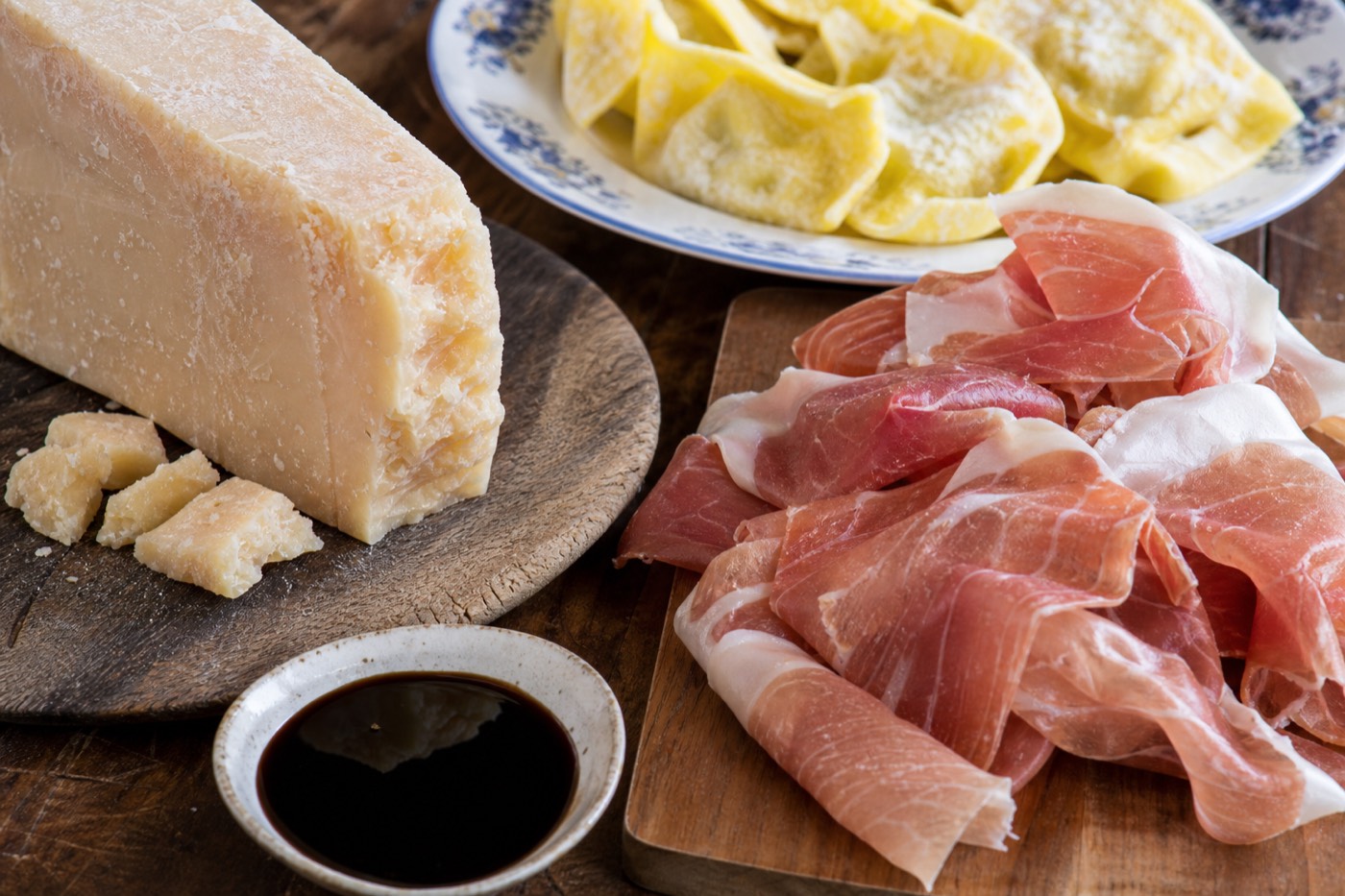
Ask someone what Parma is famous for and you'll get "cheese and ham" within about two seconds, which is true but leaves out most of what makes the region's food worth a dedicated trip. Parmigiano Reggiano and Prosciutto di Parma are both DOP products, meaning the name is legally protected and tied to strict production rules within a defined zone, and both are only two entries on a longer list that includes one of Italy's rarest cured meats, a vinegar that ages for decades, and pasta shapes you won't find outside Emilia-Romagna. This guide covers the products themselves: what they are, how aging and curing change them, and how to tell a serious version from a supermarket one. For where to actually sit down and eat them, see our separate guide to the best restaurants in Parma, which handles the where; this page handles the what.
At A Glance: Taste the city through artisan workshops. Explore Parma Artisan Food Walk
None of this is exotic or hard to find once you know what to look for. Nearly every specialty shop, market stall and tasting tour in the city center is built around the same handful of products covered below, which makes Parma one of the rare places where you can genuinely go deep on five or six ingredients over a single afternoon rather than skimming a huge, unfocused menu.
What Food Is Parma, Italy Famous For?
Parma is famous for Parmigiano Reggiano cheese, Prosciutto di Parma ham, Culatello di Zibello, traditional balsamic vinegar, and fresh stuffed pastas like tortelli and anolini, all of it typically paired with regional wines such as Lambrusco. These aren't just local specialties, several of them are DOP-protected, meaning producers outside a defined zone around Parma legally cannot use the name. That protection is part of why the products taste the way they do: the rules constrain everything from what the animals eat to how long a wheel of cheese has to age before it can be sold.
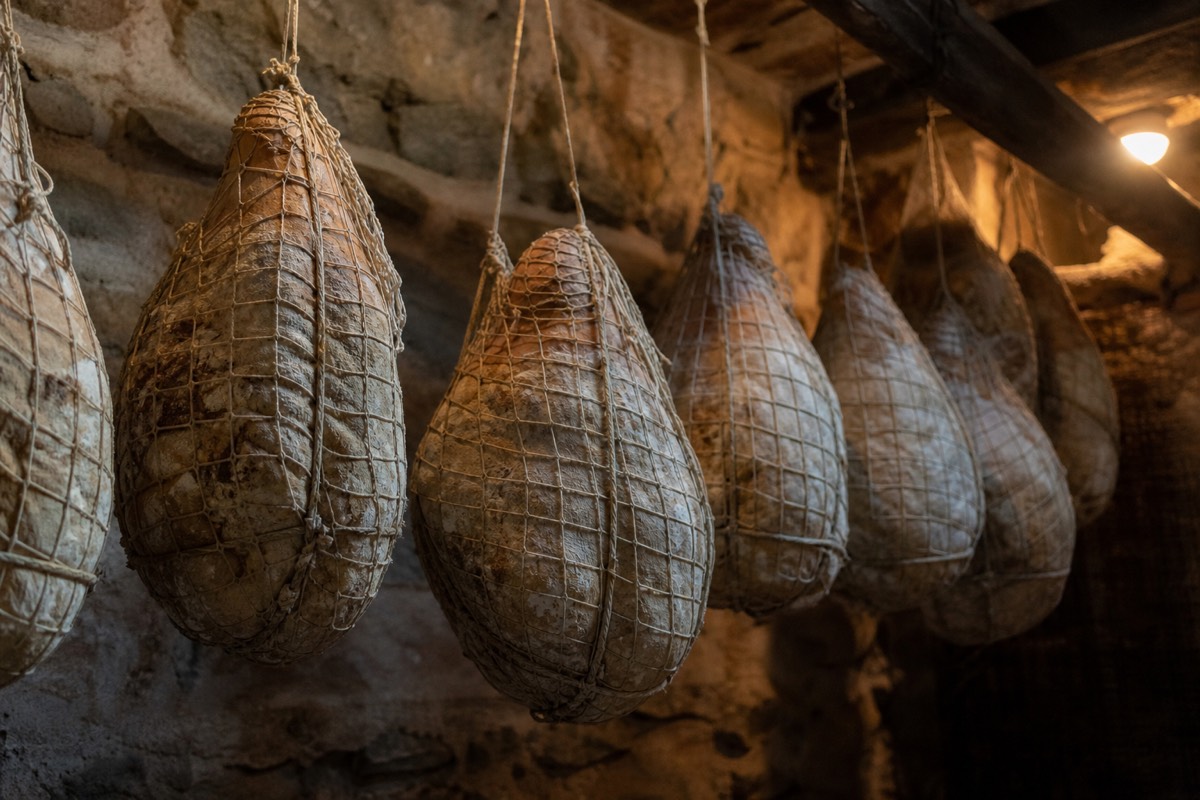
The table below lines up the region's four best-known DOP-protected products side by side, useful as a quick reference before you dive into the detail on each one.
| Product | Protection | Aging / curing time | Flavor profile |
|---|---|---|---|
| Parmigiano Reggiano | DOP | 24 / 36 / 48+ months | Mild and creamy young; sharp, nutty and crystalline with age |
| Prosciutto di Parma | DOP | Varies by curing stage, sold at different ages | Sweet, delicate, nearly translucent when sliced |
| Culatello di Zibello | DOP | Longer, more selective aging than a whole ham | Rich and concentrated, one of Italy's most prized cured meats |
| Traditional balsamic vinegar | DOP (Modena / Reggio Emilia) | Aged for years across progressively smaller barrels | Thick, dark, syrupy, far more concentrated than supermarket balsamic |
What Is Parmigiano Reggiano And Why Does Aging Matter?
Parmigiano Reggiano is a hard, aged cow's milk cheese produced under strict DOP rules, typically sold at 24, 36 or 48-plus months of aging, with flavor shifting from mild and creamy at the younger end to sharp, nutty and crystalline the longer it sits. A 24-month wheel is what most people picture when they think "parmesan": firm, slightly grainy, savory but not aggressive. Push to 36 months and the texture turns drier and more crumbly, with a deeper, almost caramelized edge. At 48 months and beyond, the cheese develops visible tyrosine crystals, the little crunchy specks that show up in properly aged wheels, and the flavor gets concentrated enough that a thin sliver does more work than a thick one.
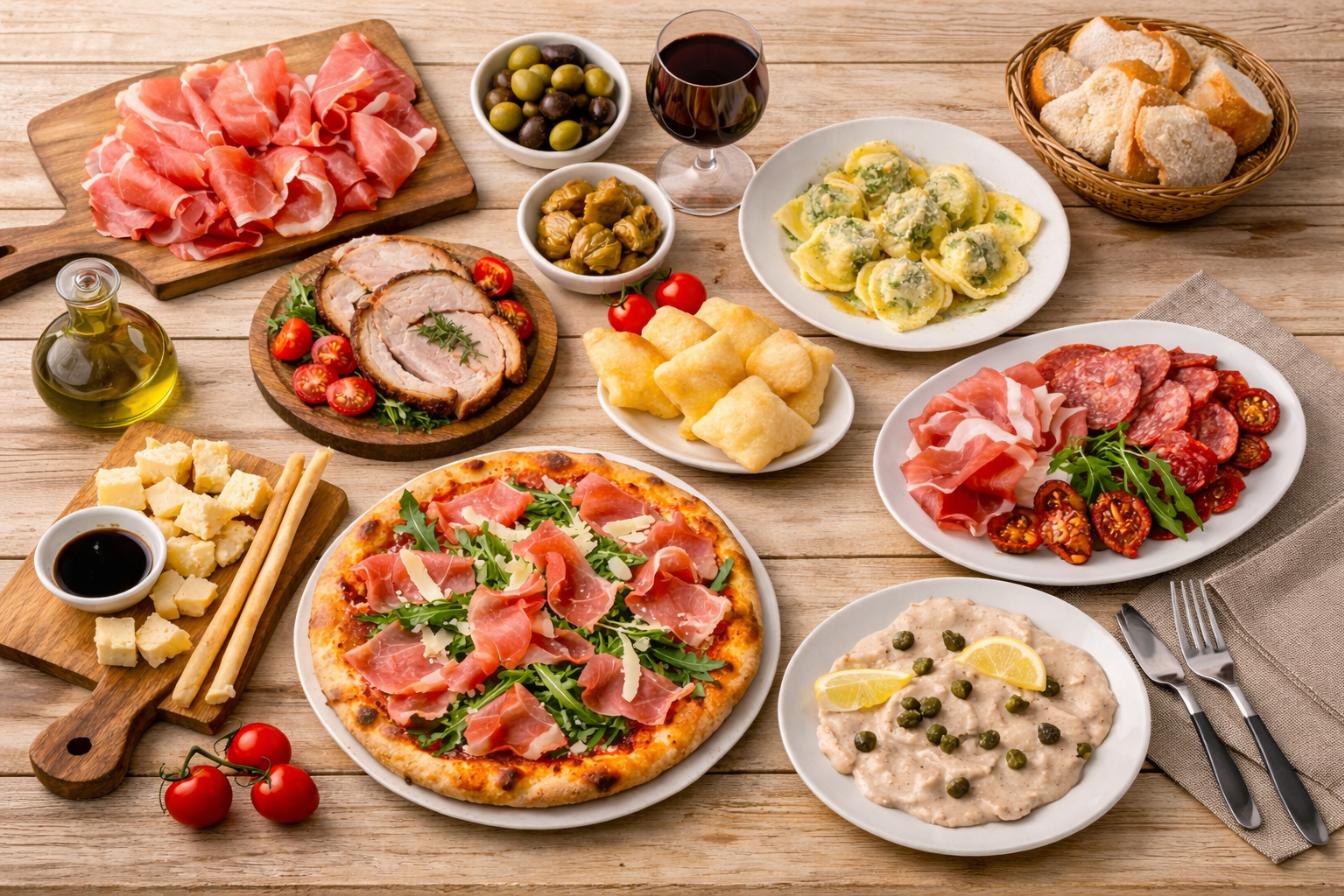
Tasting different ages side by side helps explain how texture and flavor change. Private Parma Tasting Walk explicitly includes an expert comparison of three cheese ages. A dairy tour such as Parma Cheese Factory Visit adds production context; check its current tasting details.
The rules behind the name go further than most visitors expect. Production is confined to a defined zone across Parma, Reggio Emilia, Modena, and parts of Bologna and Mantua, the cows' diet is restricted, and every wheel is inspected by an outside body before it earns the right to be branded. A wheel that fails inspection still gets sold, just under a different name and at a lower price, which is one reason the DOP stamp on the rind matters more than it might seem to a first-time buyer.
Who can skip the deep dive on aging: if you're not a cheese person and you're mainly there for the ham and the market atmosphere, a single tasting of 24-month Parmigiano is enough to understand the product without needing to work through every aging tier. The three-way comparison rewards people who already know they like cheese and want to understand why the price and flavor swing so much between wheels.
How Can You Tell Real Parmigiano Reggiano From A Fake Or Generic Wheel?
Genuine Parmigiano Reggiano carries the name stenciled repeatedly in small dots around the entire rind, along with the production date and the dairy's registration number, markings that generic "parmesan" never legally carries. On a whole wheel this is easy to check. On a pre-cut wedge it's harder, since the rind edge with the markings may have been trimmed away, so buying from a shop or producer that can show you the source, rather than an anonymous supermarket wedge, is the more reliable way to know what you're actually getting. This is also one more reason a factory or market visit pays off: you're buying from someone who can point at the wheel it came from, rather than a shelf of anonymous pre-cut wedges with no traceable source, and someone who can also tell you which age category actually suits what you're planning to cook with it.
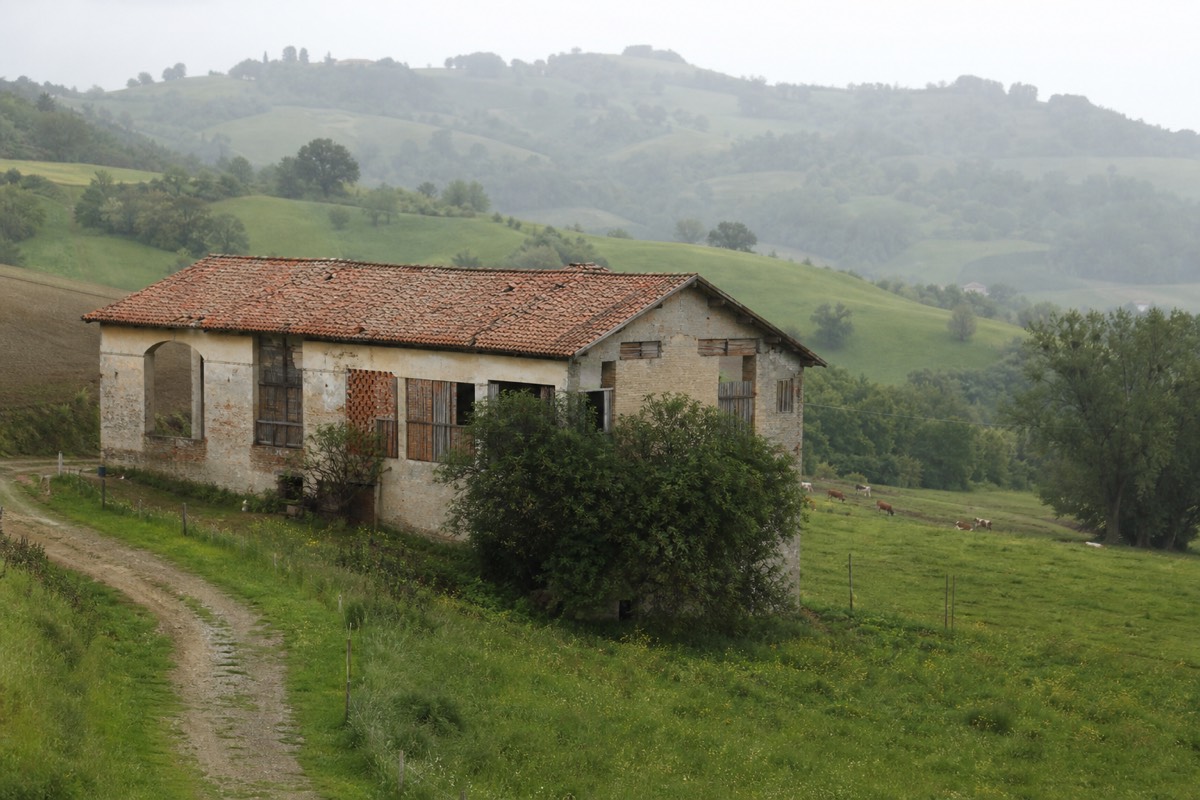
What Is Prosciutto Di Parma?
Prosciutto di Parma is a dry-cured ham made under DOP rules within a defined hill zone near Parma, salted and air-cured for a minimum period before release, with different curing stages producing noticeably different sweetness and texture. The region's specific climate, cool, dry air moving off the hills, is part of the legal justification for why the DOP zone is drawn where it is; the same curing process attempted elsewhere doesn't produce the same result, which is exactly the point of a protected designation. Freshly sliced Prosciutto di Parma should be nearly translucent, faintly sweet rather than aggressively salty, and soft enough to almost melt rather than chew.
Notably, salt is the only preservative allowed under the DOP rules, no nitrates, no added sugars, no shortcuts through faster industrial curing. That restriction is exactly why the curing period and the local climate matter so much: without chemical preservatives doing the work, time and air are the only tools producers have, and the DOP zone is drawn specifically around the hill air that makes that slow process reliable.
What Is Culatello Di Zibello And How Is It Different From Prosciutto?
Culatello di Zibello is a cured meat made from the leanest, most prized muscle of the pig's leg, cured and aged separately from the bone rather than as a whole ham, and it is widely regarded as one of Italy's most prized cured meats. Where Prosciutto di Parma cures a whole leg bone-in, Culatello is boned, trimmed down to a single muscle, wrapped and aged in a bladder casing, a slower and more selective process that yields a smaller amount of meat per pig and a noticeably richer, more concentrated flavor. It costs more for exactly that reason, and it's a good marker of whether a shop or menu is serious about its cured meats or just stocking the familiar name. Our post on what Culatello di Zibello actually is goes deeper into how it's made and how to spot the real thing.
Zibello itself is a small town in the Po River lowlands rather than the Parma hills, and the damp river-valley air there is part of what shapes Culatello's slower, muskier aging profile compared to the drier hill air used for standard prosciutto. It's a good example of how much this region's food geography is dictated by literal weather patterns rather than just tradition for its own sake. Because the yield per pig is so much smaller than a standard ham, genuine Culatello di Zibello tends to show up on tasting tours as a single, carefully portioned slice rather than a generous stack, which is worth expecting going in so it doesn't feel stingy when it happens.
What Other Cured Meats Will You Find On A Tasting?
Beyond prosciutto and culatello, expect local salami and coppa, both cured pork products with their own regional variations and typically served sliced thin alongside the headline meats. Salame Felino, made near Parma, is looser-textured and more coarsely ground than a standard salami, meant to be eaten fresh rather than shaved paper-thin. Coppa is cured from the neck and shoulder rather than the leg, fattier and more marbled, and pairs well against the leaner cuts on the same board. On most guided tastings these show up as a supporting cast around the prosciutto and culatello rather than the headline act, but skipping them means missing half the range of what the region actually produces. If you only have room to try one beyond the headline ham, ask for Salame Felino specifically; it's named for a town just outside Parma and it's the one most locals will point to as the everyday cured meat, the one that shows up at a family table rather than just on a tourist tasting board, usually eaten on its own with bread rather than layered onto a formal cheese board.
What Is Traditional Balsamic Vinegar And How Is It Made?
Traditional balsamic vinegar, Aceto Balsamico Tradizionale, is made from cooked grape must aged for years in a series of progressively smaller wooden barrels, producing a thick, dark, intensely concentrated vinegar that bears little resemblance to the thin balsamic sold in most supermarkets. Some historic acetaie (vinegar attics) age barrels for over a decade before bottling, and the aging happens through natural seasonal temperature swings rather than a controlled cellar, which is part of why production stays small and prices stay high for the real thing. A few drops on aged Parmigiano Reggiano is the standard test: if the vinegar is thin and sharp rather than syrupy and sweet, it's the supermarket version, not the traditional one. This product is technically centered on nearby Modena and Reggio Emilia rather than Parma itself, and our guide to the Bologna, Modena and Parma food valley covers how the three cities' specialties connect, including whether a day trip to Modena from Parma is worth adding to your route.
Traditional balsamic vinegar is sold by age category rather than by brand recognition, and older categories are legally required to hit specific minimum aging thresholds before they can carry the label. That's a meaningful difference from most vinegar on a supermarket shelf, which is typically wine vinegar with caramel coloring and concentrate added, cheap to produce and nothing like the barrel-aged version. If a bottle costs a few euros, it isn't the traditional product, no matter what the label implies.
What Pasta Dishes Are Parma Specialties?
Tortelli (large stuffed pasta, often filled with herbs and ricotta) and anolini (small stuffed pasta traditionally served in broth) are the two fresh pasta shapes most associated with Parma's home cooking, distinct from the tortellini more commonly linked to Bologna. Both are handmade, both show up on tasting tours as the "sit-down" course after the standing tastings of cheese and cured meat, and both are worth ordering specifically rather than defaulting to a generic pasta dish, since they're closer to what a Parma household actually cooks than most restaurant menus outside the region bother to stock.
What Wine Pairs With Parma Food?
Lambrusco, a lightly sparkling red, is the standard local pairing, cutting through the richness of cured meat and aged cheese in a way a still, heavier red usually can't. It's an unusual pairing for visitors expecting a serious still red with a cheese board, but the natural fizz and acidity are doing real work against the fat in prosciutto and culatello. Most tasting tours pour it specifically for that reason rather than as a regional curiosity. Malvasia, a lightly aromatic white, shows up less often but is worth asking for if you'd rather not drink red with a midday tasting; it has enough body to stand up to the cheese without competing with the meat courses the way a heavier white sometimes does.
What Is Parma's Signature Dish?
There's no single official "signature dish," but a plate of aged Parmigiano Reggiano and freshly sliced Prosciutto di Parma, eaten together, is the closest thing to it, since both products are DOP-protected, both are named for the city, and both are what nearly every tasting tour builds its structure around. If forced to pick one composed dish rather than a pairing, tortelli d'erbetta (herb and ricotta-filled tortelli) is the closest candidate for a genuine home-cooked specialty, though it gets far less international recognition than the cheese and ham do. Ask three different Parma locals what the signature dish is and you'll likely get three different answers, which is itself a useful clue: this is a food culture built around a handful of world-class raw ingredients rather than one showpiece recipe, closer to how people talk about Champagne or single-malt Scotch than how they talk about a national dish.
What Does A Typical Tasting Tour Actually Cover?
A standard Parma food tour runs 3 to 4 hours, moves through 4 to 6 specialty shops or producers, and includes 8 to 12 substantial tastings, usually finishing with a relaxed sit-down course rather than ending on a standing snack. The table below breaks down what that structure typically looks like against the size of the group, since a market-style walking tour and a countryside factory circuit are built differently even though both are billed as "food tours."
| Tour style | Typical group size | What you'll taste |
|---|---|---|
| City walking tour | 6-12 people, private options available | Parmigiano at multiple ages, prosciutto, cured meats, fresh pasta, wine |
| Small-group market tour | Capped around 8 | Market produce plus shop tastings, often behind-the-scenes kitchen access |
| Countryside factory tour | Small group or private | Cheese factory and/or ham producer visit, aging rooms, on-site tasting |
A useful worked example: on a typical guided tasting, the order runs youngest cheese to oldest (so a 24-month Parmigiano before a 36 or 48-month one), then into the cured meats starting lighter (coppa or salami) and finishing on prosciutto and culatello, then a palate reset before the balsamic vinegar tasting, and finally the pasta and wine course. Guides sequence it this way on purpose: tasting the oldest cheese or the balsamic first would flatten your palate for everything that follows. If you're building your own tasting at home or at a shop counter, the same order works.
Who should skip a full sit-down tasting tour: if you're only in Parma for a few hours between trains, a full 3 to 4-hour tasting tour probably doesn't fit your schedule, and a shorter market stop or a single specialty shop visit, buying a wedge of Parmigiano and a few slices of prosciutto to eat on a bench in Piazza Garibaldi, covers the essentials without the time commitment. Save the full tour for a day when you actually have the afternoon free, since the sit-down course at the end is a real chunk of the value and rushing through it defeats the point.
What Is The Difference Between Parmigiano Reggiano And Generic Parmesan?
Parmigiano Reggiano is a legally protected name tied to a specific production zone and rule set; "parmesan" is a generic term that can legally describe cheeses made anywhere, often with shortcuts the DOP rules don't allow. Our post on Parmigiano Reggiano versus parmesan goes through exactly what separates the two, including how to check a wheel's rind for the stenciled DOP markings that generic parmesan will never carry.
Where Does The Cheese Factory Visit Fit If You Want To See This Made, Not Just Taste It?
Scheduled producer visits and city tasting walks solve different needs. Private Parma Producer Day visits cheese, ham and balsamic producers in eight hours with lunch, while Private Parma Tasting Walk samples regional foods in the city over three hours. Neither itinerary should be treated as interchangeable with a short independent shop visit. Related reading: Parmigiano Reggiano factory tours in Parma, Prosciutto di Parma ham tours, list of things to do in Parma, guide to getting to Parma from Milan, Florence, Bologna and Venice.
One practical note before you book anything: most producers and tour operators can accommodate dietary requests, vegetarian substitutions especially, but a fully traditional Parmigiano and prosciutto tasting cannot be made vegan without losing the two products the whole trip is built around. Flag any restrictions when you book rather than at the first stop, since shops and dairies often need advance notice to prepare an alternative spread, and last-minute substitutions tend to be thinner than what's offered to guests who gave the operator a day or two of notice. A quick message when you book is usually all it takes.
Two sources behind the claims on this page: the Food Museums of Parma network, which documents the region's protected products in depth, and Italy's official tourism board page for Parma.